


India’s First Front Loading 4x4 Concrete Mixers-Apollo Carmix Equipments Pvt. Ltd.-ACEPL
What key factors are driving the increasing adoption of self-loading concrete mixers in India?
The increasing adoption of Self-Loading Concrete Mixers (SLCMs) in India is driven by rapid infrastructure development, rising labor costs, and the need for faster project execution. Government initiatives such as PMAY, Smart Cities Mission, and rural infrastructure projects are creating strong demand for mobile and efficient concreting solutions.
SLCMs offer significant advantages by combining loading, batching, mixing, transporting, and discharging functions into a single machine, reducing manpower and operational costs while improving productivity. Their mobility and compact design make them highly suitable for remote, rural, and congested urban construction sites where ready-mix concrete access is limited.
In addition, advanced features such as digital weighing systems, automated controls, GPS, and telematics help ensure better concrete quality and reduced material wastage. Easier financing and rental options are also encouraging small and medium contractors to adopt SLCMs as part of the growing shift toward mechanized construction in India.
How are recent technological advancements transforming self-loading concrete mixers?
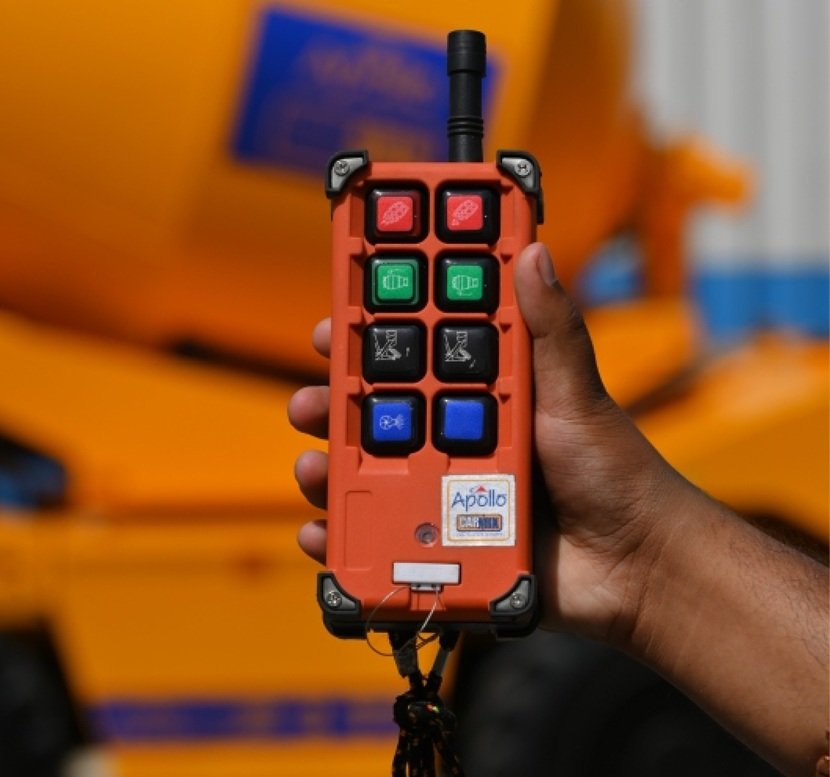
Recent technological advancements are transforming self-loading concrete mixers (SLCMs) through improved automation, accuracy, and reduced labor dependency. Advanced telematics and GPS systems enable real-time monitoring of machine performance, fuel usage, and maintenance remotely. Remote operation features help minimize the need for additional manpower and improve operational efficiency.
In addition, drum-mounted advanced load cell systems ensure highly accurate material weighing, resulting in better batching precision, consistent concrete quality, and reduced material wastage. These innovations are making SLCMs more productive, cost-efficient, and suitable for modern construction projects.
What role do automation, telematics, and digital controls play in improving performance?
Automation, telematics, and digital controls improve the performance of self-loading concrete mixers by increasing efficiency, accuracy, and reducing labor dependency. Telematics and GPS enable real-time monitoring of machine performance, fuel usage, and maintenance, while digital controls and advanced load cell systems ensure precise batching and consistent concrete quality. These technologies help reduce downtime, minimize material wastage, and improve overall productivity.
Is there a growing demand for higher-capacity or compact machines?
There is a growing demand for compact self-loading concrete mixers due to their versatility, easy maneuverability, and suitability for urban, rural, and space-constrained construction sites. Compact machines offer better mobility, lower operating costs, and higher efficiency for small and medium-scale projects, making them ideal for modern infrastructure and real estate developments. Their ability to operate efficiently in congested areas and remote locations is driving strong market preference toward compact and agile solutions.
How are rental and leasing models impacting market dynamics?
Rental and leasing models are positively impacting the self-loading mixer market by making equipment more affordable and accessible for contractors. Instead of investing a large amount in purchasing machines, construction companies can get on rent or on lease for specific projects, which helps reduce financial burden and improve cash flow. These machines are especially beneficial for small and medium-sized contractors who may not have the budget for outright ownership. They also increase the use of advanced and modern mixers equipped with automation and telematics features. Additionally, rental companies often provide maintenance and support services, improving operational efficiency and equipment utilization. As a result, the market is becoming more flexible, service-oriented, and competitive.
What are the major challenges faced by the self-loading concrete mixer industry?
The self-loading concrete mixer industry faces several challenges that affect its growth and profitability. One major challenge is the high initial cost of purchasing these machines, which can be difficult for small contractors to afford. Rising fuel prices and maintenance expenses also increase operational costs. The industry also faces a shortage of skilled operators, as these machines require proper training for safe and efficient use. In addition, frequent transitions in emission norms, such as the shift from BS-III to BSIV and BS-V engines, are pushing manufacturers to develop more eco-friendly and fuel-efficient models, which increases production costs. Market competition, fluctuating raw material prices, and slower adoption of advanced technology in developing regions are other factors creating challenges for the industry.
Is the availability of skilled operators still a concern?
Yes, the availability of skilled operators remains a major concern in the self-loading concrete mixer industry. These machines require trained operators to handle mixing, loading, driving, and maintenance efficiently and safely. A lack of proper training can lead to operational errors, lower productivity, higher fuel consumption, and increased maintenance costs.
In many developing regions, there is still a shortage of experienced operators, which creates challenges for contractors and equipment owners. As self-loading mixers become more advanced with automation and digital features, the need for skilled and technically trained operators is increasing further.
How would you describe the level of competition in the Indian SLCM market?
The Indian Self-Loading Concrete Mixer (SLCM) market is highly competitive and fairly fragmented, with both established brands and several local manufacturers operating in the space. This creates strong price competition, especially in the mid and lower segments of the market.
Major players compete not only on pricing but also on product performance, fuel efficiency, advanced features like automation and telematics, and strong after-sales service networks. At the same time, customers are becoming more quality and service conscious, which is pushing companies to continuously innovate. As a result, the market remains dynamic, fast-growing, and highly competitive.
What are the key features of your self-loading concrete mixers?
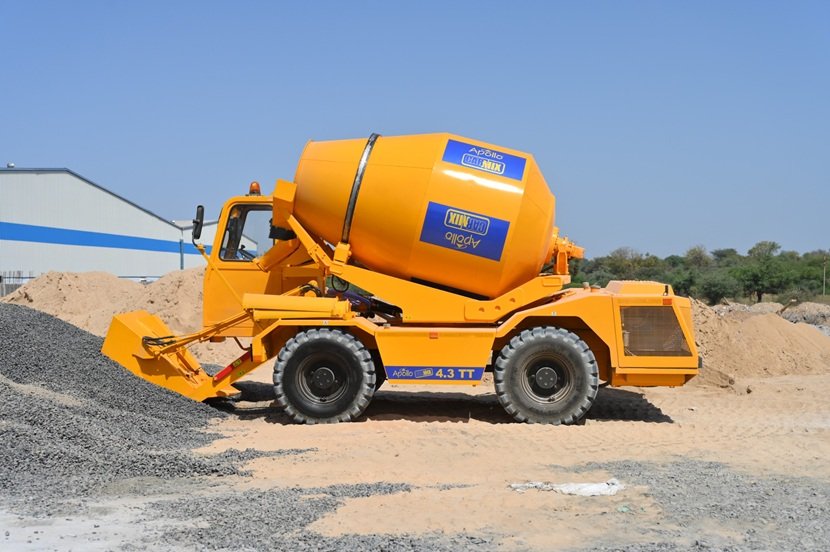
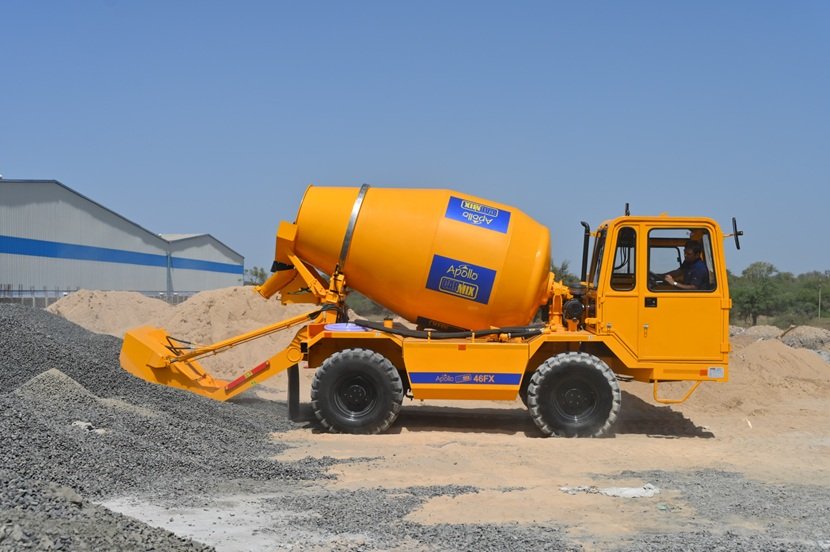
The Apollo Carmix Self-Loading Concrete Mixer is available in two series: TT series and FX series. Both series are designed to deliver zero wastage, lower fuel consumption, ROPS and FOPS cabins, joystick-controlled operations, reduced maintenance requirements, and high-quality homogeneous concrete output. The TT series features a front-loading system that ensures better operator visibility and a faster production cycle. It is equipped with a 4x4 drive system for excellent performance on rough and uneven terrain, along with a 270° rotating drum that allows flexible discharge from multiple sides, improving site efficiency. The TT series also offers joystick-based controls, enhanced cabin visibility, and optional features such as IoT-based tracking, load cell weighing systems, and a rear-view camera, which collectively improve accuracy, safety, and operational control. Additionally, its patented remote operation technology helps reduce manpower requirements and overall operating costs while increasing productivity.
Are you planning to introduce new models or innovations?
Currently, there is no immediate plan to introduce new models. At the same time, customer feedback and market requirements are being closely monitored, and any future development or product enhancement will be considered based on demand and evolving industry needs.
Related Articles




Current Issue
10-2026
